



When General Mitchell International Airport needed to expand its renewable energy capacity on a challenging brownfield site, Terrasmart stepped in with innovative engineering solutions tailored to the region’s demanding conditions.
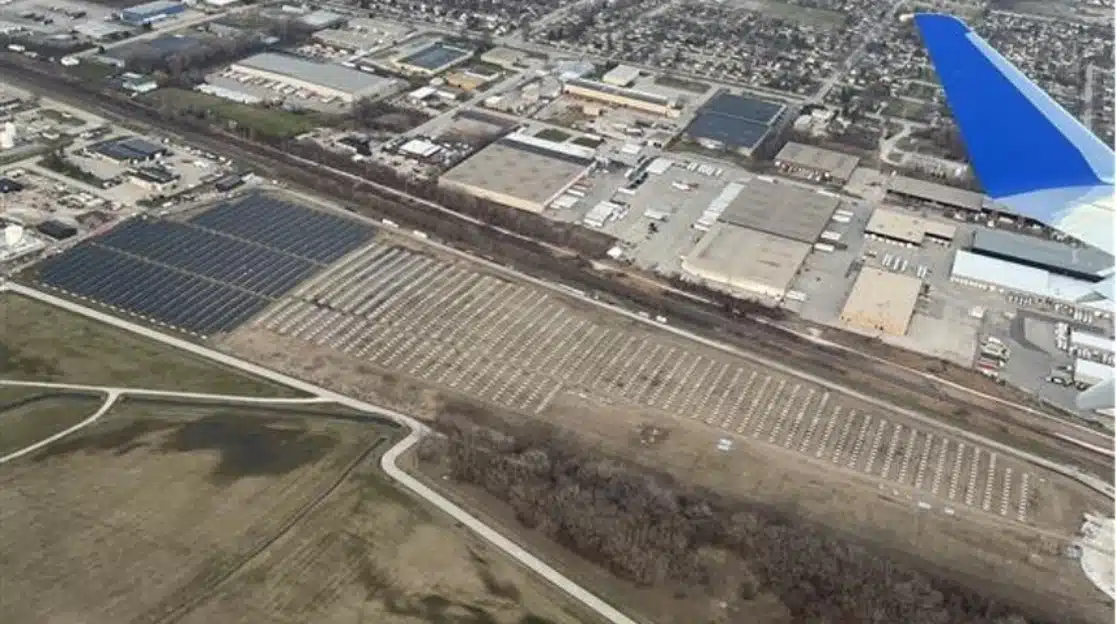
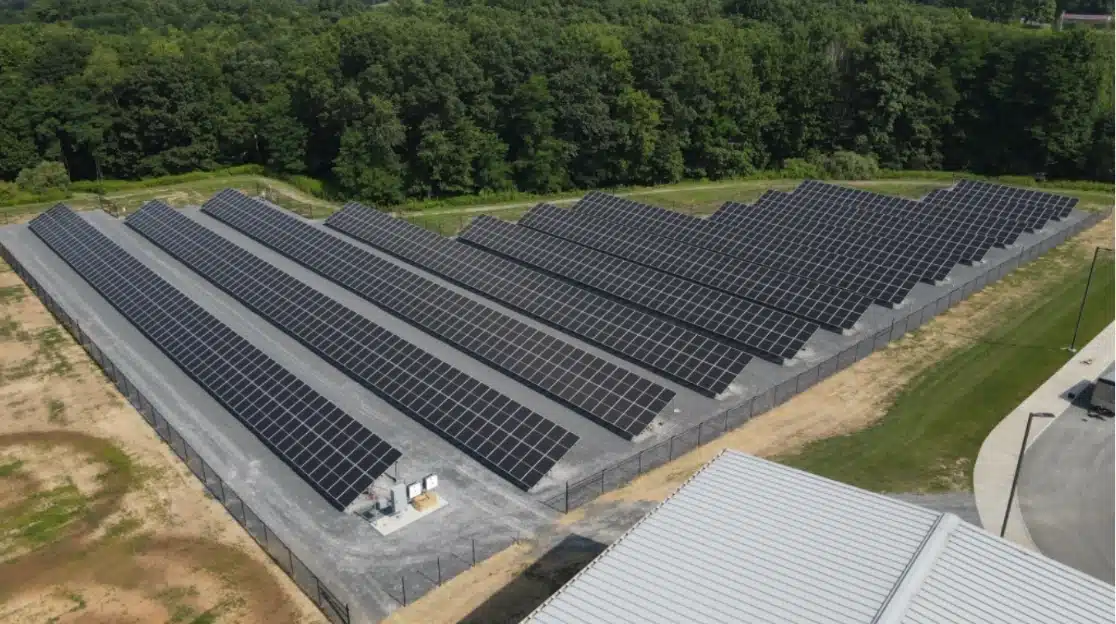
Aerial photo taken by Terrasmart team member of the project
The Challenge
The 5.65MW project, booked in late 2025 and installed in 2026, presented multiple complexities from the outset. Located adjacent to a capped landfill and a National Guard site, the project required a ballasted system that could withstand Milwaukee’s heavy snow loads and high wind speeds, which are critical considerations given the airport’s proximity and the need to minimize risk to flight operations.
The site itself demanded flexibility. During the design phase, the client requested a non-standard wire management foundation using spread footers and the ballast blocks instead of the traditional piles deployed. This pivot required the design team to recalibrate their approach while maintaining the project schedule.
Additionally, the team needed to address practical field installation challenges. Traditional bonding methods between modules and purlin can create complexity in the field, requiring installers to manage multiple components and sequences—a source of potential errors and delays on any job site.
The Solution
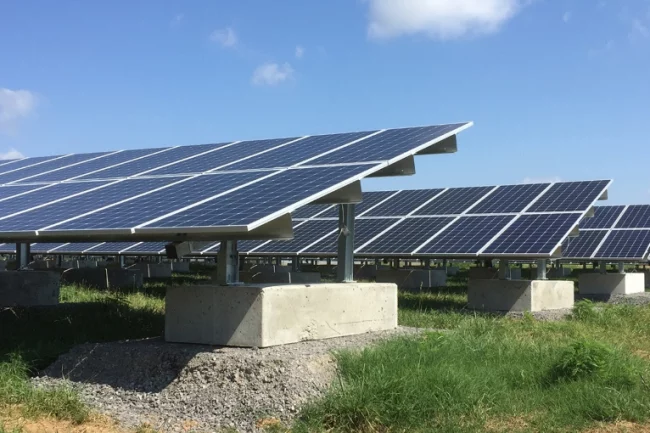
Terrasmart deployed the GLIDE Wave Ballast system, specifically engineered so it doesn’t need to disturb the soil or, in a landfill’s case, the cap. Wind-tunnel tested and proven in demanding environments, this foundation approach minimized both the structural risk to the adjacent airport and the potential for time-intensive, costly repairs down the line.
The design team’s flexibility proved essential. Terrasmart augmented its engineering effort and coordination to meet the client’s specific needs, including offering wire management system design as a value-added service, one that set the project up for success despite the non-standard foundation requirements.
Beyond structural solutions, Terrasmart introduced the client to an innovation that simplified field installation: a choice between bonding methods for the purlin punch system. The all-raised punch style option features patented integrated bonding slots that reduce field errors and complexity. Installers no longer need to track multiple purlin components or worry about installation sequence. This is a small but meaningful innovation that speeds up work and eases the burden on crews in the field.
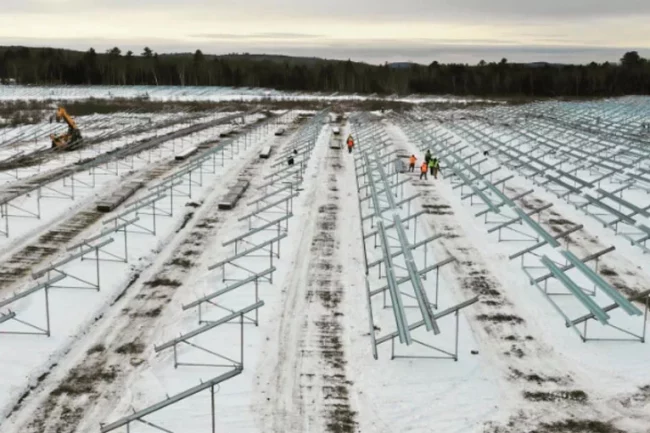
Installation Example of Terrasmart’s Wave Ballast System
The Result
The 5.65MW installation builds on the success of a 2020 project at the same location—then the largest solar array in Milwaukee at 2.25 megawatts. That original system, comprising more than 7,000 panels, provides energy equivalent to that used by 460 homes annually. This expansion nearly triples that capacity, significantly advancing Milwaukee’s goal of obtaining 25 percent of its electricity from renewable energy.
Beyond the numbers, the project carries profound community impact. The brownfield site reuse demonstrates how solar development can reclaim underutilized land while delivering environmental benefits. Perhaps most importantly, the system supports emergency preparedness by providing backup power to the 128th Air Refueling Wing of the Air National Guard should the electrical grid become compromised, a critical capability for regional security.
Terrasmart’s extensive experience designing for challenging sites in heavy snow and wind regions ensured the project stayed on schedule despite its complexities. The result is a landmark installation that showcases how thoughtful engineering, innovative solutions, and collaborative problem-solving can turn site constraints into opportunities, delivering both immediate power generation and long-term community resilience.


