
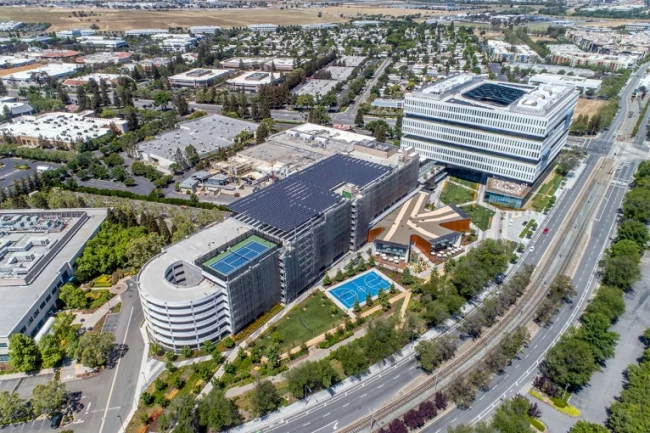

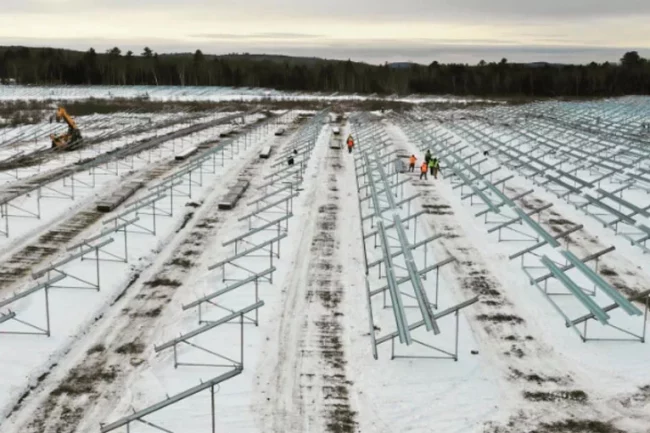
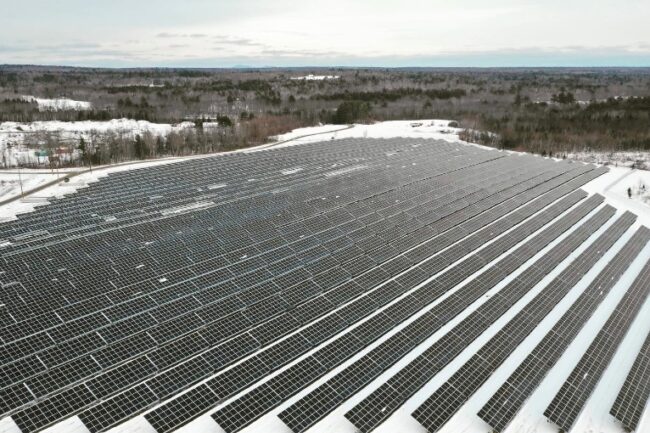


The most productive solar sites all have this in common: a solid foundation. Without a foundation that’s custom designed for the unique terrain, soil, topography, weather, and subsurface conditions of a particular site, a solar development risks performance instability from the start.
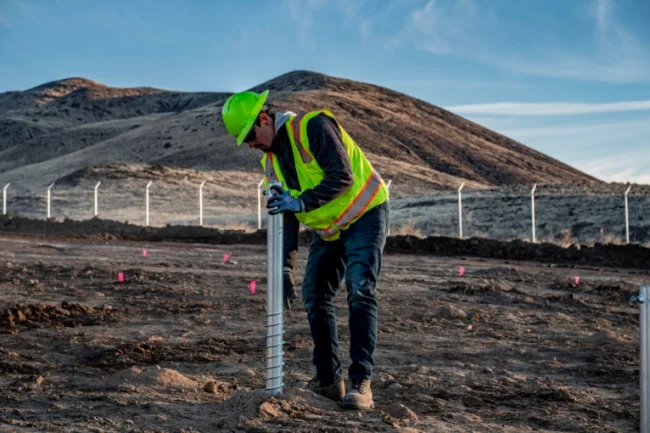
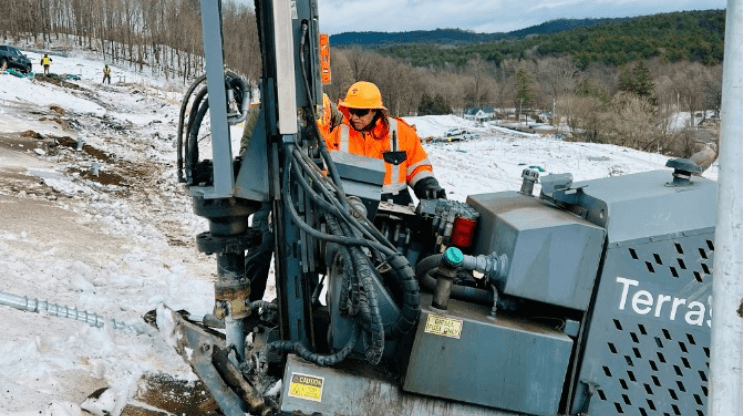
Ground screw foundations have opened new doors to bottoms-up security and maximum production over the life of a project. They are increasingly the foundation of choice due to fast installation, zero refusal risk, and the ability to withstand frost-prone soils.
Still, there is no one-size-fits-all answer to “what’s the best foundation type?” A more effective question is “how can I identify and mitigate subsurface risks?” This question kicks-off the process for choosing the most suitable foundation.
Key Design Factors
When choosing between ground screws, driven piles, and ballasts, the decision flow begins with a soil assessment. A comprehensive geotechnical report and pull-out testing reveal subsurface risks and provide data-driven insights.
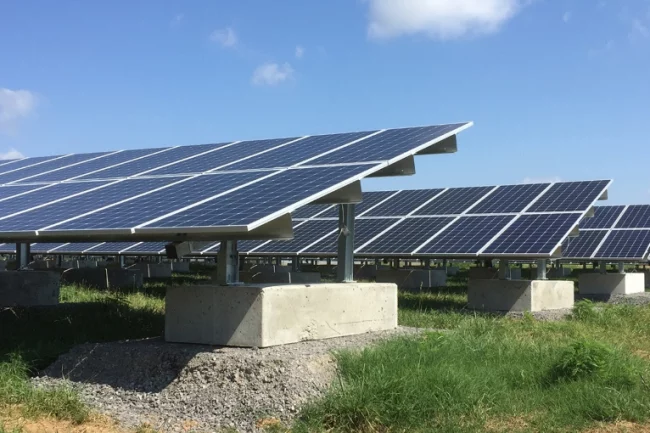
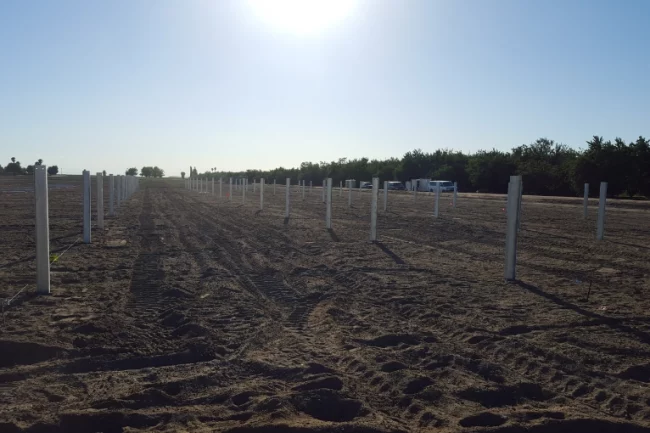
The results of the soil assessment generally yield a clear foundation direction. In simplest terms, driven piles work well in ideal site conditions without significant frost depths, ground screws provide stability in less-than-ideal subsurface conditions, and ballasts are reserved for sites where ground penetration isn’t possible and settling risk is low.
Since ground screws are a more specialized foundation option, there are common misconceptions about their use, ranging from “they are more expensive” to “they work on any soil.” A detailed soil assessment prevents decisions based on misconceptions and allows installation partners to provide cost-benefit analyses. Typically, the upfront material costs can be higher for ground screws, but the savings from labor costs and speedier installation can lead to higher overall ROI.
Six Solar Foundation Design Considerations
1. Geotechnical Report
Given the critical importance of geotechnical report results, knowing what to look for is equally critical. The report document, created by a geotechnical engineering firm, summarizes subsurface characteristics and captures key data points across frost depth, water table, adfreeze bond stress, soil composition, and corrosion. With this data, teams can assess various levels of risk, including:
- The combined results of frost depth, adfreeze bond stress, and the water table measure risk for frost heave.
- The soil composition informs the level of risk for refusal or deflection.
- Blow counts provide a measure of soil density and approximate shear strength.
- Boring logs give insights into the different soils and rocks at different depths.
- Given the analyses, it will include a foundation recommendation.
2. Freeze Bond Stress
When it comes to adfreeze bond stress values, available data can seem very limited. The Canadian Foundation Engineering Manual is considered the gold standard for assessing freeze bond stress and resources like Cornell frost maps and geotechnical reports can aid site-specific assessments.
Direct communication with geotechnical engineers is key, as is creating a checklist for evaluating complete reports. Requesting supporting documentation and calculations is a standard best practice, and the additional information adds credence to safety decisions.
3. Installation Success Factors
Torque plays a critical role in ground screw installation success. Achieving minimum torque during construction is non-negotiable, and generic torque values are no longer considered enough for risk-proofing installation.
Now, site-specific torque planning and refusal planning are the norm. With refined planning processes, teams can prevent remediation needed when torque isn’t achieved, and instead reduce field remediation needs altogether.
4. Expansive Clay Soil Management
Clay soil is one of the least friendly settings for solar sites. It’s still possible to create foundation stability even in expansive clay. Active zone and swell pressure inform how much soil will heave and the force it will apply to foundations as a result of moisture variations.
This is another case where collaboration with geotechnical specialists is a tried-and-true best practice. Blanket solutions don’t work for expansive soils because they don’t account for volume changes caused by moisture fluctuations. This can lead to increased corrosion risks and stability considerations. Site-specific engineering guidance is the best avenue to maximum stability and safety.
5. Frost Depth Design Strategy
Frost is a foundation foe, but a manageable one. Piles without any frost mitigation can lead to extreme embedment depths and high costs when combined with frost susceptible soil and deep frost depths. There are various techniques to mitigate frost effects with driven piles to improve embedment depths. Most aim at reducing adfreeze forces created between the soil and the surface of the pile.
Another alternative is to utilize ground screws. The trick with ground screws is installing all threads below the frost depth. Partial thread capacity in frost zones complicates designs because it creates conflict between uplift forces and bearing capacity. The foundation can fail if the portion meant to provide stability is not installed completely below the frost line. Working backwards, accurate frost depth analysis is paramount to frost depth design strategy.
6. Managing Client Expectations on Long-Term Risk
As developers know, managing foundation choices is only one aspect of foundation design. Managing client expectations is an important piece of a project’s puzzle. Clients may balk at conservative foundation strategies. To address these concerns, look at the probability of future events and cumulative risk.
Solar projects have lifespans of two decades or more. So areas that may not have experienced frost or other weather-related events in recent years may make conservative forecasts seem questionable. But when we consider the full lifespan of a project, it becomes clear that it’s necessary to balance conservative design principles with accurate probabilities of future risk to protect sites and prevent avoidable project risk.
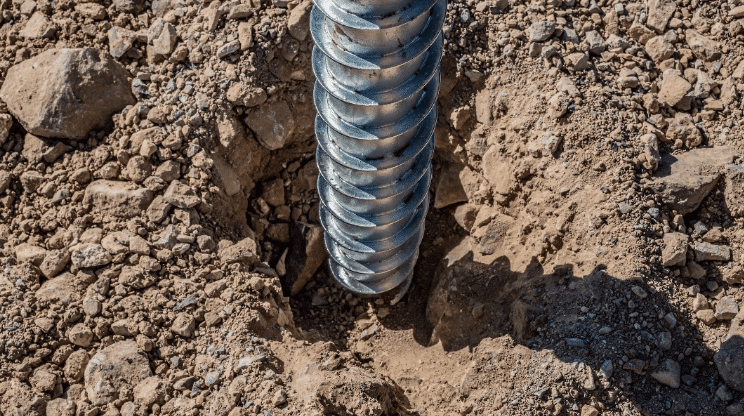
Ground Screw Foundations of the Future
Ground screw foundations continue to anchor innovative solar projects across an expanding geographic footprint, even on terrains previously deemed too difficult to develop. While they are not the answer for every site, soil assessments and geotechnical reports can guide accurate decision-making for best-fit foundations.
All in all, thorough planning and open communication with the right experts is a requirement for stable and productive sites, and a resilient solar-powered future.
Learn more here about our foundation expertise.


