
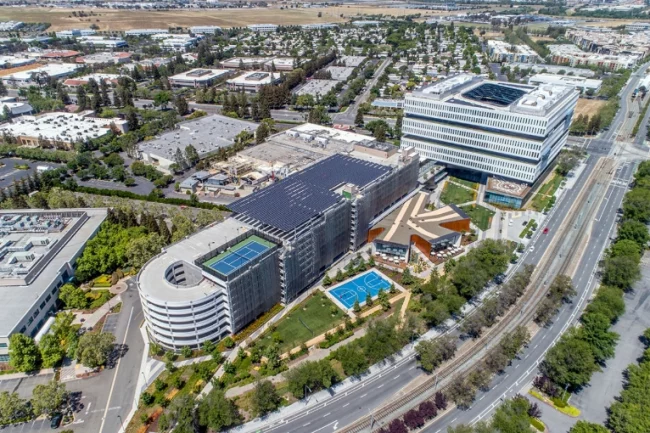

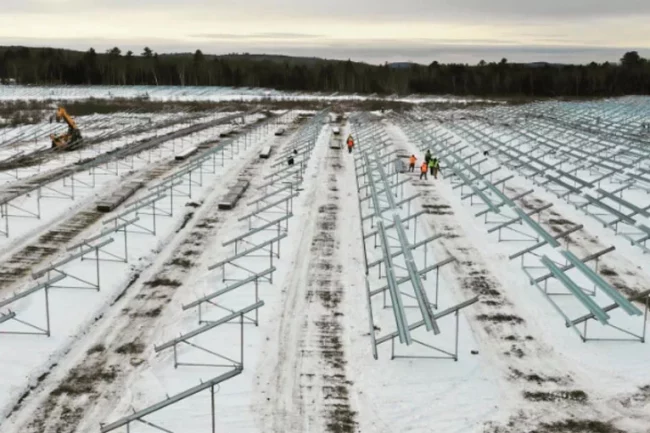
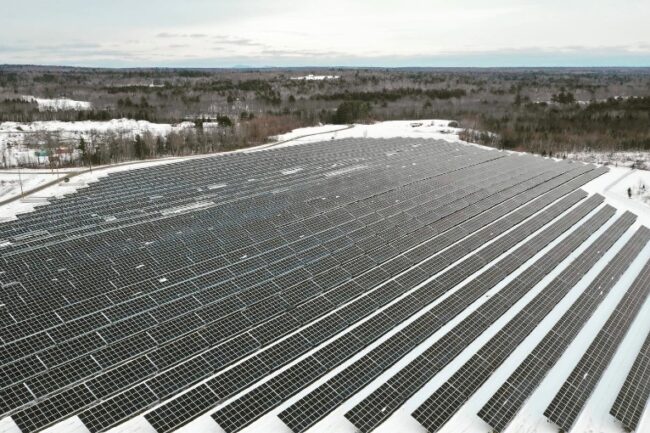


Ohio’s economy has always run on manufacturing. Today, that same industrial foundation is helping turn the state into one of the fastest-growing solar markets in the country. Terrasmart sits squarely at the intersection of the two.
Terrasmart’s Cincinnati manufacturing operation exemplifies the Midwest’s solar ambitions and executional know-how
Ohio’s Manufacturing Advantage Meets the Solar Growth
Manufacturing accounts for 15% of Ohio’s economy, supports one in seven jobs, and generates more wages than any other sector in the state. Central Ohio has become a hub for tech manufacturing, and solar manufacturing already dots the map from Illuminate Solar in Central Ohio to First Solar in the northwest corner of the state. Ohio is now home to over 250 solar companies with the majority manufacturers at more than 100 companies, and the rest made up by installers, developers, and others.
These aren’t two separate storylines. Ohio’s manufacturing base is exactly the kind of infrastructure the solar industry needs in order to scale: skilled labor, fabrication capacity, and a supply chain that already knows how to produce at volume.
The Midwest’s Solar Moment
Nationally, electricity demand is climbing faster than it has in decades, driven by four converging forces: AI and data-center development, advanced manufacturing and reshoring, transportation and building electrification, and steady residential and commercial growth. Ohio is a live example of what that looks like on the ground. Intel is investing more than $28 billion in two advanced semiconductor factories near New Albany. Amazon Web Services expects its cumulative Ohio data-center investment to exceed $23 billion by 2030. Google has invested more than $20 billion in Ohio data-center infrastructure since 2019, and Meta has put more than $1.5 billion into its New Albany campus while announcing another AI-optimized facility in northwest Ohio. Not every project will land exactly on its original timeline, but together they signal structurally higher electricity demand for years to come. Utilities in the region are planning for this growth.
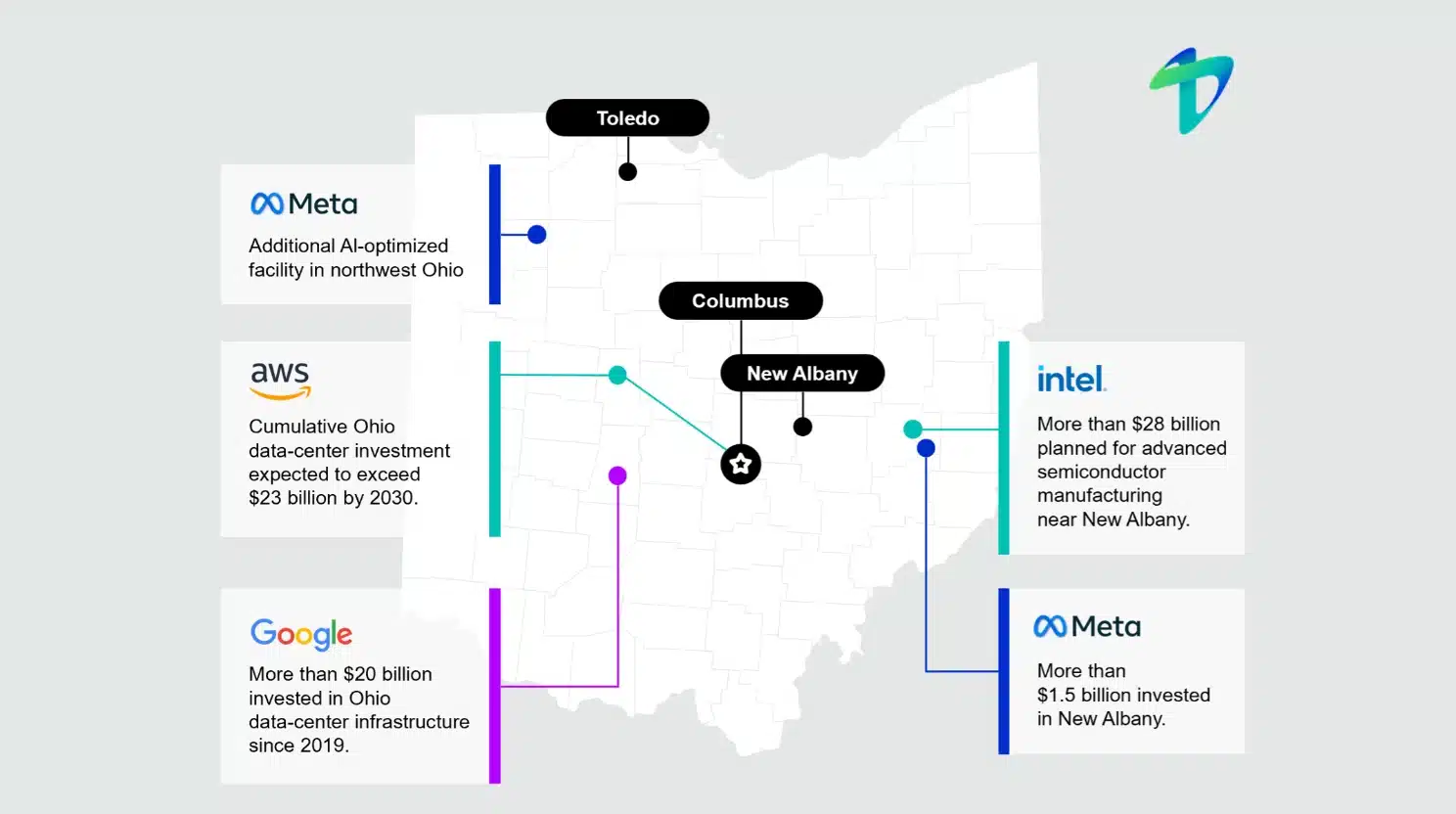
TerraTech sector build-outs are fueling energy demand in Ohio.
At the same time, solar development is shifting toward the Midwest. In the first quarter of 2026, Ohio ranked third in the nation for new solar installations at 617 MWdc, trailing only two other states, with a 2020–2030 compound annual growth rate of 19.6%. Indiana ranked fourth (610 MWdc, 43.1% CAGR), Illinois sixth (454 MWdc), and Michigan seventh (340 MWdc).
That shift creates a real opportunity for the region to capture more of the energy value chain by manufacturing locally using the Midwest’s steel, fabrication, engineering, and automation capabilities. Deployed regionally, this will serve utilities, manufacturers, data centers, public agencies, and communities while retaining the economic value inherent to the jobs, the supplier relationships, and the reduced logistics risk.
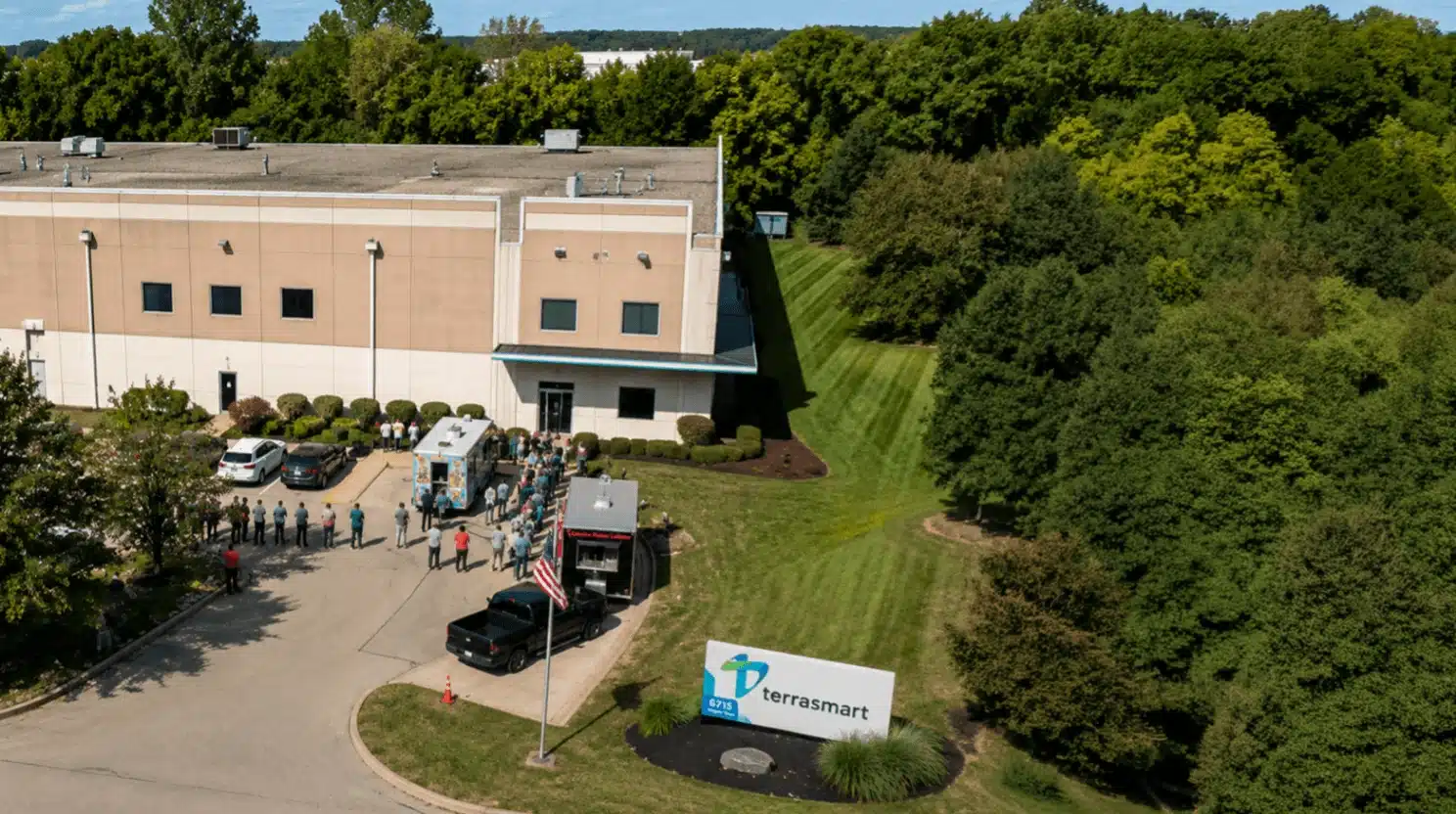
Staff gather outside of Terrasmart’s Ohio office.
Terrasmart’s Cincinnati Footprint: A Proof Point for What’s Possible
Terrasmart designs, manufactures, and installs solar racking and foundation systems, which gives the company a direct, ground-level view of how manufacturing decisions affect project economics, field performance, and deployment speed. Its Cincinnati operation is a working example of the kind of manufacturing ecosystem the Midwest already has in place.
The Steger Drive facility includes approximately 122,000 square feet of dedicated manufacturing space and roughly 157,000 square feet overall, with an additional 30,000-square-foot warehouse nearby in Fairfield, Ohio. Approximately 200 Cincinnati-area employees work across manufacturing, engineering, design, and support functions, backed by a network of at least 14 Ohio-based suppliers providing steel, tube, fasteners, galvanizing, shipping, and installation services. Core capabilities on site include steel roll forming, welding and metal fabrication to produce a variety of racking components.
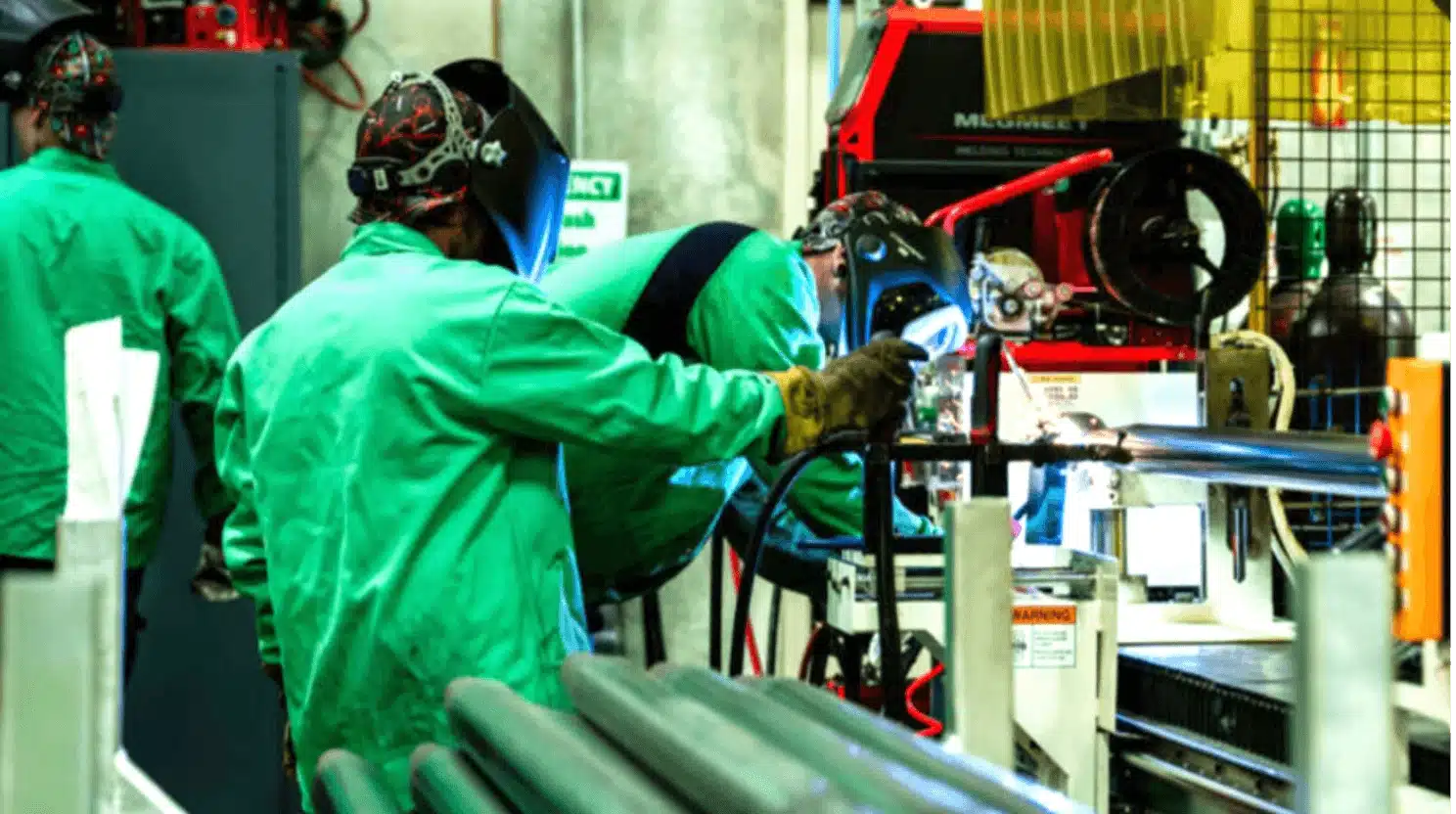
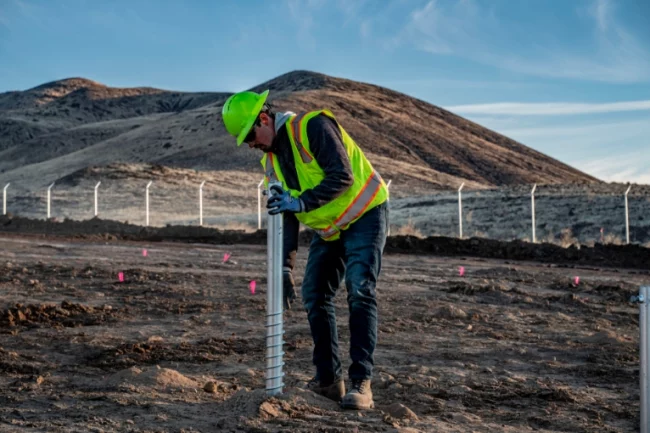
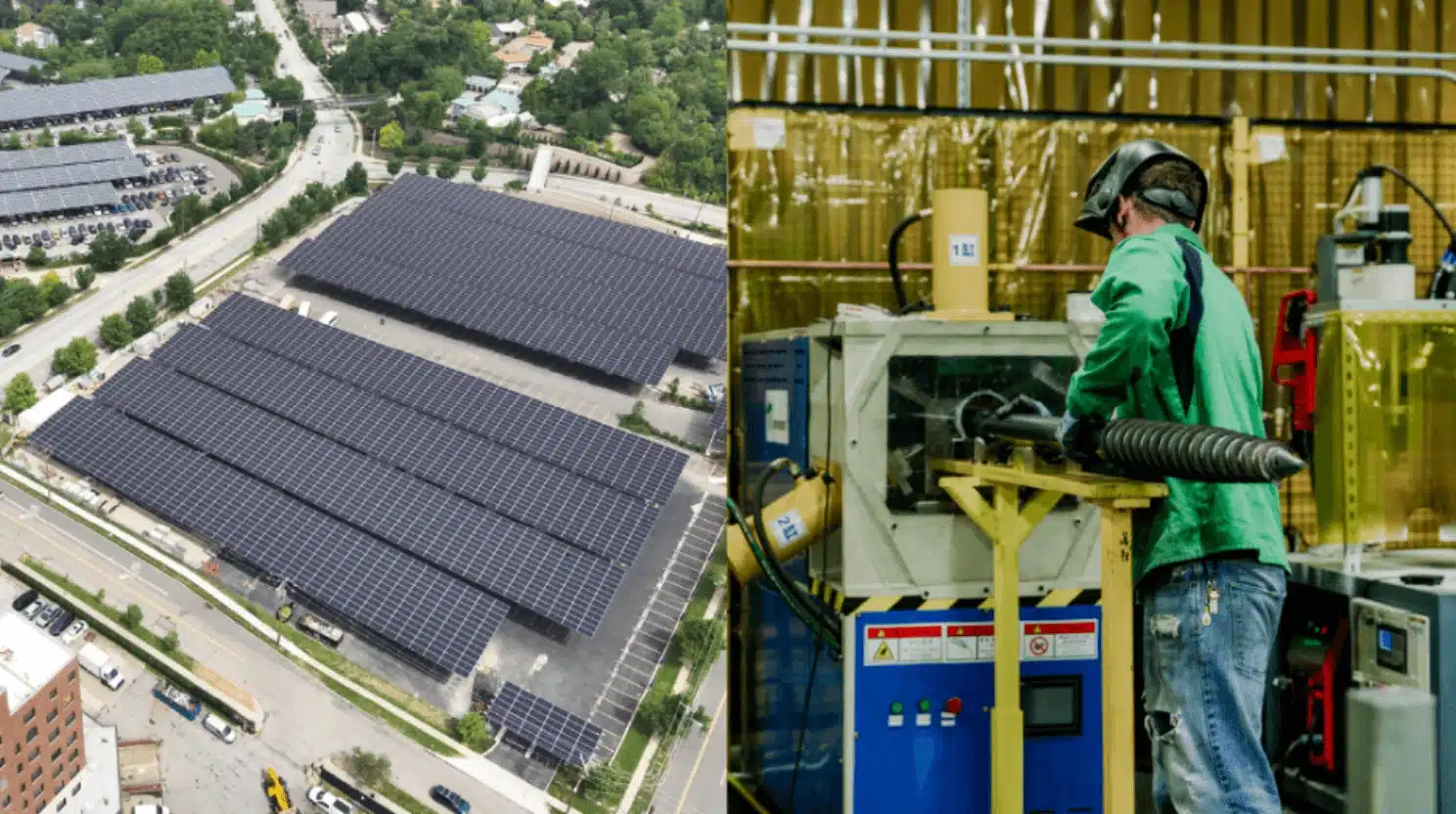
Crew manufactures ground screws at Terrasmart’s Cincinnati, Ohio facility with domestically sourced steel.
Betting on Domestic Production
Terrasmart’s legacy of domestic production in Ohio goes back to its predecessor, RBI Solar, a solar foundation company that was based in Cincinnati until folded into Terrasmart. RBI Solar’s integration brought over 85 years of commercial design-build expertise into the Terrasmart team. Since then, Terrasmart has invested in its in-house design capabilities, including its patented ground screws now manufactured in Cincinnati.
Originally manufactured overseas under close supervision by Terrasmart, we on-shored ground screw production in 2025 to the Ohio facility while adding a welding center of excellence. At the time, external manufacturers couldn’t keep up with domestic demand, and newly levied tariffs made the domestic move more attractive. It also enabled us to oversee from design through to production in-house with no language or time barriers to overcome. This technical expertise, in addition to supply chain and existing manufacturing knowhow, played a major role in Terrasmart’s decision to in-source ground screw manufacturing.
New federal sourcing and domestic-content rules have only reinforced the trend, raising the importance of ownership, traceability, and supplier qualification for manufacturers who want to compete for long-term projects.
Manufacturers today are contending with tariffs and trade exposure, freight and logistics volatility, supplier traceability, and long-term demand uncertainty. Increasingly, the math favors building closer to home.
Built for Real Midwest Sites, Fulfilling Real Midwest Needs
Terrasmart’s expertise and Midwest-built foundations are already at work solving inherently Midwestern deployment challenges with American-designed and -built solutions:
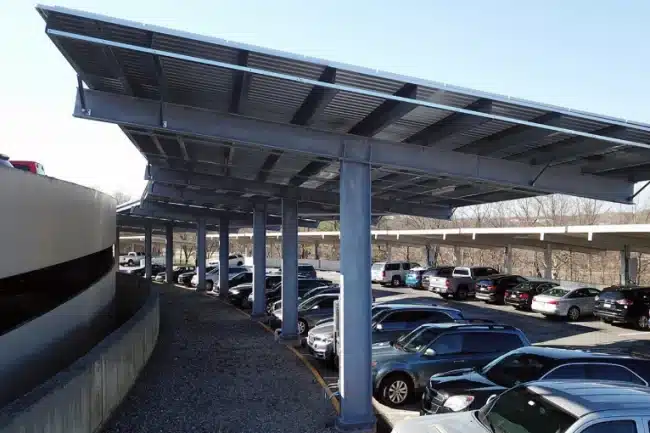
- Commercial canopies and onsite generation: projects with the Cincinnati Zoo and Owens Corning, place power close to load, reduce peak demand, and preserve usable land.
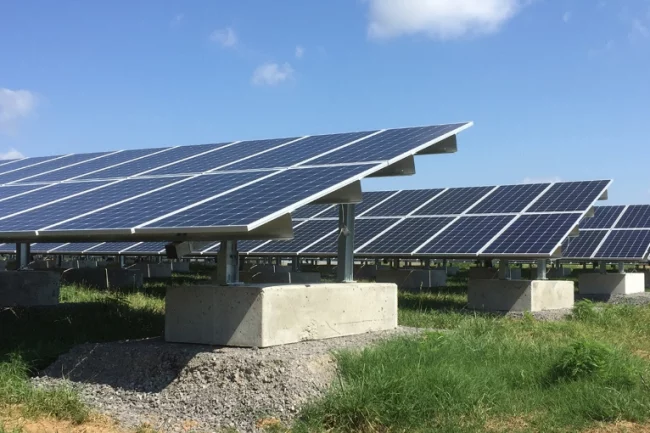
- Brownfields and landfills: a ballasted foundation system at the Brooklyn Landfill near Cleveland, OH, paired with First Solar Series 7 modules, turned constrained land into productive energy infrastructure without conventional deep foundations.
- Community and public facilities: in Fairfield, Ohio, a solar project offsets electricity use tied to a water-treatment facility, keeping the energy savings in the community it serves.
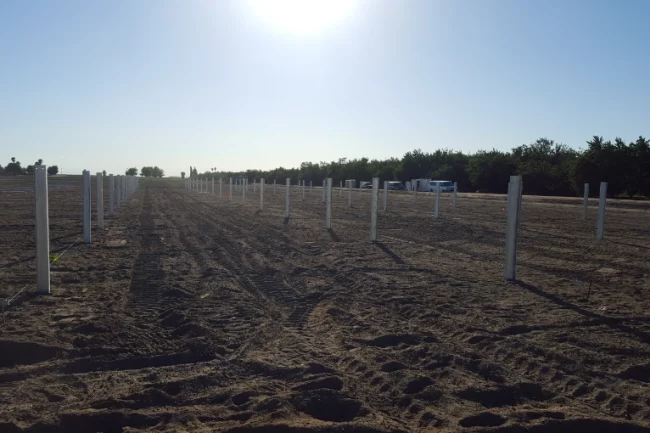
- Cold climates and variable soils: ground screws and project-specific frost mitigation address the frost depth, frost heave, and drainage challenges common across the Upper Midwest, like on the Solitude II project.
- Solar-plus-storage: as storage attachment rates rise, coordinated foundations, structural layouts, and construction sequencing support fully integrated sites rather than treating storage as an afterthought.
With Terrasmart now a part of Unirac, the two brand’s combined portfolio of rooftop solutions, ground-mount and canopy portfolio form a more complete offering for customers developing and constructing projects like those mentioned above.
Imperatives for Midwest Solar Manufacturing Growth
No single manufacturer, developer, utility, or state can capture this opportunity alone. It’s no different than when on-shoring foundation manufacturing – coordination is the competitive advantage. Four approaches stand out as priorities for solar manufacturers, developers and regional governments:
-
- Strengthen supplier depth across steel, fabrication, components, coatings, logistics, and installation.
- Build the workforce pipeline through partnerships with community colleges, trade schools, unions, workforce boards, and high schools.
- Continue to put out durable market signals like clear policy and project pipelines that support long-term capital investment.
- Remove unnecessary roadblocks and bureaucracy that delay or tank projects, such as long interconnection queues, difficult permitting processes, or constrained labor capacity.
The Midwest is set up for success. It already has the industrial expertise, production assets, engineering talent, logistics networks, and supplier relationships needed to scale. Terrasmart’s Cincinnati operation is just one of many real-world examples of what happens when a state’s manufacturing DNA and clean-energy ambitions point in the same direction: towards domestic growth. and as the center of gravity for U.S. solar continues shifting toward the Midwest, Ohio is positioned not just to participate in that growth, but to help lead it.
Sources: IEA, Demand – Electricity 2026 Analysis; Wood Mackenzie Q2-2026 U.S. Solar Market Insight Report; Ohio Manufacturers’ Association; SEIA.


